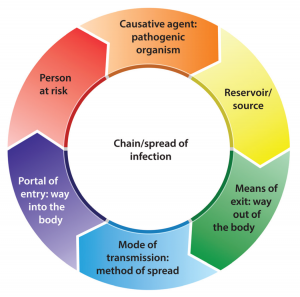
In order for the spread of infectious diseases to take place, the ‘chain of infection’ must be completed. There are six links in the chain.
1st link – Causative agent, This is the harmful germ or pathogen that can cause infection, illness and disease. Examples: bacteria & viruses.
2nd link – Reservoir/Source, This is where pathogens live and multiply.
3rd link – Means of exit, This is how pathogens leave the source. Example: Through sneezing or coughing.
4th link – Mode of transmission, It refers to how the pathogen is passed on from one person to another. Example: direct contact (hand to hand) or indirect contact (via objects such as equipment)
5th link – Portal of entry, this is the way that the pathogen enters the body of
the potential host. Example: through broken skin or when needles or catheters are inserted.
6th link – The person at risk, A person at risk is the individual the pathogen moves to.
Breaking The Chain
Preventing infection means breaking the links in the chain so that an infection cannot spread. Some links are easier to break than others.
Standard precautions include:
Good hand hygiene
Safe disposal of waste
Safe management of laundry
Correct use of personal protective equipment (PPE)
Steps in Infection Prevention
It is vital to remember that not everybody who carries harmful micro-organisms will be ill or show any symptoms. This means that staff must work in ways that prevent infection at all times.
Additional Measures Required
In a work place it may be necessary to take additional measures when supporting people who are know to be carrying some harmful micro-organisms to protect others from contamination. This can be particularly important if the pathogens travel through the air.
Login
Accessing this course requires a login. Please enter your credentials below!